What Is Terroir? Discovering Anjou Through Its Vineyards


You hear the word everywhere in the French wine world.
Terroir.
It is often translated as “soil”, but that definition barely scratches the surface.
To truly understand terroir, sometimes the best thing you can do is leave the tasting room, put on a pair of comfortable shoes and walk into the vineyard.
And in Anjou, the landscape offers some spectacular examples.
Terroir is much more than soil
When we taste wine, we naturally focus on what is inside the glass: aromas, acidity, texture, fruit, minerality and length.
But every wine begins somewhere else.
It begins in a vineyard.
Terroir describes the combination of natural conditions that influence the vine and ultimately the grapes it produces.
Soil and geology are obviously important, but they are only part of the story.
The orientation of a vineyard, its altitude, its slope, its exposure to sunlight, drainage, wind and local climate can all play a role.
Even two vineyards located relatively close to one another can therefore produce wines with noticeably different personalities.
This is one of the reasons exploring Anjou is so fascinating.
A remarkably diverse wine region

At first glance, Anjou can appear to be one wine region.
Spend some time travelling through its vineyards, however, and you quickly realise how diverse it actually is.
The landscape changes.
The soils change.
The grape varieties change.
And, naturally, the wines change too.
Across relatively short distances, the geology of Anjou can vary considerably. This diversity helps explain why the region is capable of producing such a broad spectrum of wines, from vibrant dry whites and expressive reds to sparkling and sweet wines.
It is also why visiting the vineyards themselves adds another dimension to a tasting.
You are no longer simply being told that two wines come from different terroirs.
You can actually see the difference.
When vineyards become spectacular
Some vineyard landscapes are particularly revealing.
Vines growing on steep slopes face very different conditions from vines planted on flatter ground.
Water drains differently. Exposure to the sun can change. The soil may be thinner, with the underlying rock much closer to the surface.
For the people cultivating these vineyards, steep terrain can also mean considerably more demanding work.
Standing at the bottom of one of these slopes and looking towards the top immediately puts things into perspective.
Wine suddenly becomes more than something poured into a glass.
Behind every bottle lies a landscape — and the decisions and work required to cultivate it.
Rocks beneath the vines

One of the most interesting things about walking through vineyards is discovering what lies beneath your feet.
In parts of Anjou, rock is not hidden several metres underground.
It can be an obvious feature of the landscape.
For visitors, this makes discussions about geology much easier to understand.
Instead of looking at a geological map in a tasting room, you can stand among the vines and observe the terrain for yourself.
This is where a concept that can initially sound rather abstract — terroir — becomes tangible.
You begin connecting the landscape with the wine you will taste later.
From vineyard to glass

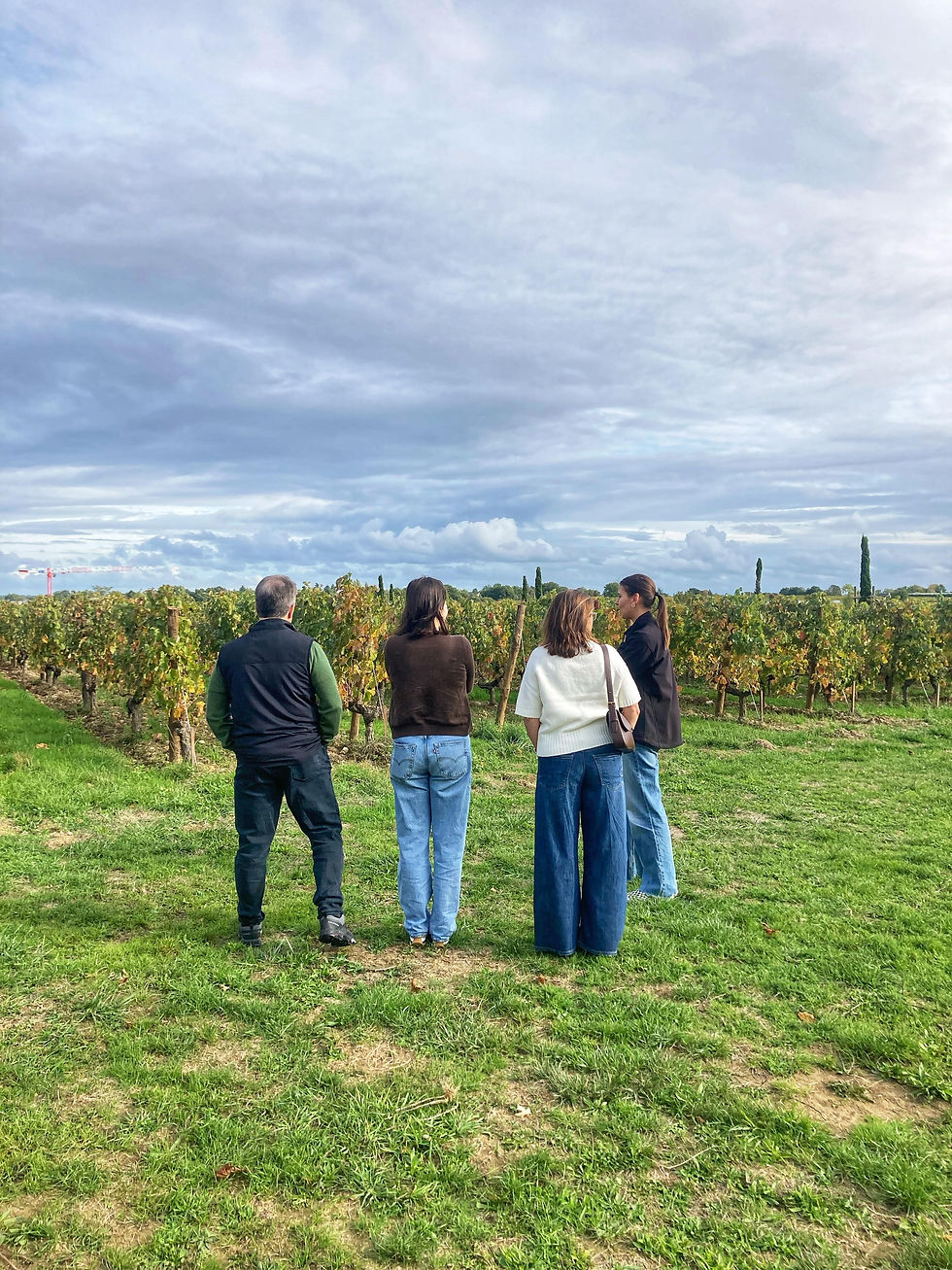
This is why we particularly enjoy beginning a wine experience outside whenever possible.
Walking through the vines gives context to everything that follows.
When you later taste the wine, conversations about freshness, structure, concentration or the identity of a particular vineyard suddenly make much more sense.
You have seen where the grapes grow.
You have experienced the slope.
You have looked at the soil and the rocks.
And perhaps you have discussed with the people behind the wine why they chose to work a particular parcel in a particular way.
The tasting becomes the final chapter of a story that began in the vineyard.
Understanding wine rather than simply tasting it
There is absolutely nothing wrong with simply enjoying a delicious glass of wine.
But wine tourism can offer something more.
It allows visitors to understand why wines taste the way they do.
For us, this is one of the most rewarding parts of a wine tour.
The objective isn't to turn visitors into wine experts in a day.
It is to provide the keys that make wine easier — and more interesting — to understand.
Why is this vineyard planted here?
Why does the winemaker value this particular slope?
What makes one parcel different from another?
How does geology influence the way a wine is perceived?
Questions like these transform a tasting into an exploration of a region.
Discovering the real Anjou
The Loire Valley is famous around the world for its châteaux.
But beyond the monuments lies another landscape that deserves to be explored: its vineyards.
Around Angers and throughout Anjou, generations of winegrowers have learned to work with an extraordinary variety of landscapes and geological conditions.
Discovering these vineyards on foot, talking about the vines and finally tasting the resulting wines provides a very different way of experiencing the Loire Valley.
It is slower.
More personal.
And often far more memorable.
Because once you have stood among the vines and understood where a wine comes from, the glass in front of you never looks quite the same again.
Explore Anjou's vineyards with Anjou Wine Tour
Our private wine tours from Angers are designed to introduce visitors not only to Loire Valley wines, but also to the landscapes, people and stories behind them.
From vineyard walks and cellar visits to conversations with local winegrowers and guided tastings, each experience offers an opportunity to discover what makes Anjou such an exciting wine destination.
Come and discover Anjou — from the vineyard to the glass. 🍷


Commentaires